
Apartment at 10 Mostowa Street in Kraków | one desk
Appartamento in via Mostowa 10 a Cracovia Kraków / Poland / 2025
6
Our first impression upon entering the apartment on Mostowa Street in Kraków was far more modest than the expectations raised by the beautiful, eclectic tenement building. To see the potential of this space, we had to cut through a tangle of numerous alterations made over the years. The bedrooms were intersected by a low wooden mezzanine, and at the back of the almost windowless kitchen stood a cramped bathroom partitioned with plasterboard. Fortunately, from our first conversation with the clients, we sensed a sensitivity to detail and respect for the original 19th-century fabric. From the very beginning, it was clear that their goal was to uncover everything most valuable in this apartment from beneath the many layers of change.
One of the main challenges—so typical for buildings of this period—was to bring light from the four generous windows overlooking Mostowa Street into the depth of the apartment. The layout was elongated, with a second section only indirectly lit and—true to 19th-century standards—lacking a proper bathroom within the unit. The original one was located outside the apartment, accessed from a shared corridor, so one of our first tasks was to design a comfortable, functional bathroom inside the flat.
We decided to merge two rooms to create a large, representative living area. In historical buildings, kitchens were traditionally separated from living spaces, and we wanted to preserve this logic to some extent. The kitchen was placed toward the back, but connecting it to the living room was key—not only visually but also functionally. To achieve this, we widened and raised the opening between the two spaces, crowning it with a stone lintel. One of the corners was additionally rounded, subtly emphasizing the sense of flow and softening the transition between the rooms.
In the living room, the only built-in element is a niche in the spot of the former tiled stove, now housing a custom-designed shelving unit with a delicate mirrored back panel. The rest of the furnishings form a loose, informal composition—a deliberate nod to the character of classic tenement interiors, where furniture was selected freely, guided more by the individuality of pieces than by matching sets. Varied forms and textures come together to create a harmonious whole, while the openness of the arrangement gives the interior lightness and a timeless character. The atmosphere is completed by works of Kraków-based artist Michał Sroka.
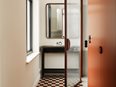
In the kitchen, the countertop is made of quartzite, and along the opposite wall we integrated a large built-in cabinet that conceals the refrigerator and offers generous storage. This solution allowed us to install a relatively small wall cabinet above the countertop—housing the hood—rather than an entire row of overhead units. Behind the kitchen, we located the bathroom. It is accessed via a small hallway illuminated by indirect light entering through a window facing the shared corridor. The bathroom door is crafted from steel in a warm brick tone and fitted with reeded glass. The bathroom itself stands out for its above-standard height, which made it possible to create an arched niche with a mirror. The walls feature vertical Ragno tiles combined with panels clad in walnut veneer, introducing natural texture and a warm accent to the space.
The kitchen and hallway floors are finished with cream-and-terracotta tiles from the French brand Winckelmans, laid in a classic checkerboard pattern—a nod to the original flooring still found in the building. In the remaining rooms, an oak herringbone parquet prevails. The walls are adorned with light beige wainscoting—a simple gesture that organizes the space and adds warmth to the tall interiors.
Photos: N2 Studio
La nostra prima impressione entrando nell’appartamento in via Mostowa a Cracovia fu molto più modesta rispetto alle aspettative create dal bellissimo eclettico edificio d’epoca. Per vedere il potenziale di questo spazio, abbiamo dovuto districarci attraverso una serie di numerosi interventi realizzati nel corso degli anni. Le camere da letto erano attraversate da un soppalco di legno molto basso e, sul retro della cucina quasi priva di finestre, si trovava un bagno angusto ricavato con pareti in cartongesso. Fortunatamente, sin dal primo incontro con i clienti abbiamo percepito una sensibilità particolare per il dettaglio e un rispetto per la struttura originale ottocentesca. Fin dall’inizio era chiaro che il loro obiettivo fosse riportare alla luce tutto ciò che in questo appartamento aveva più valore, nascosto sotto molti strati di modifiche.
Una delle principali sfide—così tipica per gli edifici di questo periodo—era portare la luce proveniente dalle quattro ampie finestre affacciate su via Mostowa fino al cuore dell’appartamento. La pianta era allungata, con una seconda parte illuminata solo indirettamente e—secondo gli standard del XIX secolo—priva di un vero bagno all’interno dell’unità. L’originale si trovava infatti al di fuori dell’appartamento, accessibile da un corridoio comune, quindi uno dei nostri primi compiti è stato progettare un bagno confortevole e funzionale all’interno della casa.
Abbiamo deciso di unire due stanze per creare un’ampia e rappresentativa zona giorno. Negli edifici storici, le cucine erano tradizionalmente separate dagli spazi abitativi, e volevamo preservare in parte questa logica. La cucina è stata collocata sul retro, ma collegarla al soggiorno era fondamentale—non solo visivamente ma anche funzionalmente. Per farlo, abbiamo ampliato e rialzato l’apertura tra i due ambienti, sormontandola con un architrave in pietra. Uno degli angoli è stato ulteriormente arrotondato, sottolineando in modo sottile la continuità del percorso e addolcendo il passaggio tra le stanze.
Nel soggiorno, l’unico elemento fisso è una nicchia nel punto in cui un tempo si trovava la stufa in maiolica, ora occupata da una libreria su misura con un delicato pannello posteriore specchiato. Il resto dell’arredo è una composizione libera e informale—un riferimento deliberato al carattere degli interni classici dei palazzi d’epoca, dove i mobili venivano scelti liberamente, guidati più dall’individualità dei pezzi che da set coordinati. Forme e texture diverse si combinano per creare un insieme armonioso, mentre l’apertura della disposizione dona all’ambiente leggerezza e un carattere senza tempo. L’atmosfera è completata dalle opere dell’artista di Cracovia Michał Sroka.
In cucina, il piano di lavoro è in quarzite, e lungo la parete opposta abbiamo integrato un grande mobile a tutta altezza che nasconde il frigorifero e offre molto spazio contenitivo. Questa soluzione ci ha permesso di installare un pensile relativamente piccolo sopra il piano di lavoro—che ospita la cappa—anziché una lunga fila di armadietti superiori. Dietro la cucina si trova il bagno. Vi si accede attraverso un piccolo disimpegno illuminato dalla luce indiretta che entra da una finestra affacciata sul corridoio comune. La porta del bagno è realizzata in acciaio in una calda tonalità mattone e dotata di vetro scanalato. Il bagno stesso si distingue per la sua altezza superiore alla media, che ha permesso di realizzare una nicchia ad arco con uno specchio. Le pareti sono rivestite con piastrelle verticali Ragno combinate con pannelli in impiallacciatura di noce, che introducono una texture naturale e un accento caldo nello spazio.
Il pavimento della cucina e del disimpegno è rifinito con piastrelle crema e terracotta del marchio francese Winckelmans, posate in un classico motivo a scacchiera—un omaggio al pavimento originale ancora presente nell’edificio. Nelle altre stanze prevale un parquet in rovere a spina di pesce. Le pareti sono decorate con un’elegante boiserie beige chiaro—un gesto semplice che organizza lo spazio e aggiunge calore agli interni alti.
Fotografie: N2 Studio
6 users love this project
Enlarge image

Our first impression upon entering the apartment on Mostowa Street in Kraków was far more modest than the expectations raised by the beautiful, eclectic tenement building. To see the potential of this space, we had to cut through a tangle of numerous alterations made over the years. The bedrooms were intersected by a low wooden mezzanine, and at the back of the almost windowless kitchen stood a cramped bathroom partitioned with plasterboard. Fortunately, from our first conversation with...
- Year 2025
- Work started in 2024
- Work finished in 2025
- Total area 76 m²
- Status Completed works
- Type Apartments
- Websitehttps://one-desk.pl/pl/projects/mostowa-ii/

comment