

In Paris, the international architecture competition for Louvre Nouvelle Renaissance has selected the winning proposal for the transformation of the Grande Colonnade: the project is designed by STUDIOS Architecture Paris and Selldorf Architects, with BASE Paysagiste for landscape design.
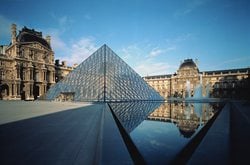
Announced on 18 May 2026 by the French Ministry of Culture, the result marks a key step in the broader plan launched in early 2025 to renew the Louvre nearly forty years after the Grand Louvre Modernization and Ieoh Ming Pei’s iconic pyramid. The aim is both to repair and transform the museum, preserving its architectural heritage while adapting it to contemporary expectations, public access needs, and the long-term challenges of sustainability.
The competition focused on the Grande Colonnade, one of the central moves in this larger transformation. The selected project was chosen for the quality of its architectural proposal and for the way it integrates heritage, urban, and landscape concerns while addressing accessibility, clarity of circulation, restraint, vegetation, and safety. The Louvre’s next phase therefore begins from its eastern façade, where a historic entrance is brought back into focus and reinterpreted as a contemporary threshold between museum and city.
A new geography of access
At the core of the proposal is a new access sequence connecting the city, the palace, and the museum. STUDIOS and Selldorf envision an elegant link structured around the reactivation of the east-west axis and a clear progression of spaces guiding visitors from the public realm into the museum itself. From the belfry facing the Louvre, the historic axis is re-established and reorganised through a calmer and more coherent public space extending from Saint-Germain-l’Auxerrois to the esplanade of the Colonnade, ending in a clearly legible entrance point.
Within this composition, the original perspective connecting the Cour Carrée, the Pyramid, the Carrousel, the Arc de Triomphe, and La Défense is restored. A new belvedere is introduced to frame the Colonnade façade and the transformed moat landscape. The project is therefore not only about orientation and flow, but also about restoring a broader urban and visual continuity to one of the museum’s most significant historic fronts.
Ramps, planted moats, and new services
One of the most distinctive features of the proposal is the descent into the moats through two symmetrical gently sloping ramps, conceived as a clear and partially sheltered passage carved into the thickness of the retaining wall. The moats are transformed and planted, becoming not only part of the access system but also a climatic and landscape infrastructure for the museum. The balance between mineral and vegetal elements is treated as essential to improving visitor comfort.
Beneath the ramps and within the hollow of the wall, the project introduces new food and bookshop spaces accessible from moat level. In this way, the intervention does more than redesign an entrance: it creates a new active band of services and public amenities, making the Louvre more welcoming both inside and outside the museum.
New museum entrances and a renewed Mona Lisa route
The proposal also includes two new underground entrances located on either side of the moats, on the Seine side and the rue de Rivoli side. These lead to clear and functional reception spaces connected to new exhibition areas and to the future Mona Lisa route, one of the competition programme’s defining components.
The brief also called for a dedicated space that would allow visitors to experience the painting under more satisfactory conditions, as well as a new technically advanced area for temporary exhibitions.
The “Grande Colonnade” plan is therefore intended to renew the overall visitor experience: more fluid, more legible, and more comfortable. The intervention is not limited to an architectural gesture, but proposes a broader rethinking of movement, waiting, access, and hospitality within the world’s most visited museum.
A new phase for the Louvre
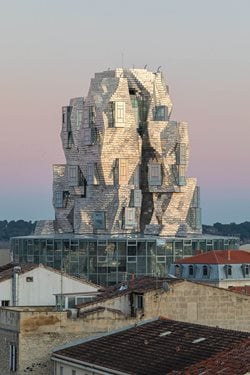
Led by James Cowey, STUDIOS Architecture Paris brings to the project the experience of an international collective that has worked, among other cultural commissions, on the Fondation Louis Vuitton and Fondation Luma Arles alongside Gehry Partners.
Selldorf Architects, founded in New York by Annabelle Selldorf, is widely recognised for its work on complex cultural institutions such as The Frick Collection and the National Gallery in London. Their proposal is complemented by BASE Paysagiste, responsible for the landscape and urban design dimension of the project.
A new period of consultation will now begin, involving the Louvre, the winning team, the City of Paris, state services, museum staff, and the public. Yet the direction is already clear: the Louvre’s “new renaissance” will begin with the Grande Colonnade, turning the eastern front into a more accessible, more urban, and more fully integrated threshold between heritage, landscape, and contemporary city life.


 2
2
 22
22
 40
40
comment